
Dentist Linda Vista San Diego

Call UsLearn More

Welcome to Salt and Smile Dental Co!

Finding a dentist Linda Vista San Diego residents can count on for straight answers and steady follow-through takes more than a quick search. Dr. Shawn Yazdanmehr built Salt and Smile Dental Co. around preventive care and restorative dentistry, all delivered by one provider instead of a rotating list of specialists. Every visit is planned around your actual oral health, not a routine handed to everyone who walks through the door, so you leave understanding your treatment and why it was recommended.

Get Started on Your Confident Smile

Our Mission

Dr. Shawn Yazdanmehr and our entire team are committed to creating an environment where dental anxiety has no place and transparency guides every conversation. We understand that choosing our practice means placing trust in someone who will be your partner in lifelong oral health, which is why we’ve built our practice on three core values: humanism, confidence, and transparency. We recognize that behind every smile is a person with unique concerns, medical circumstances, and life situations. Our mission extends beyond providing exceptional dental care—we aim to be the dentist in San Diego CA you actually look forward to seeing, where your questions are welcomed, your treatment options are explained thoroughly, and you never feel rushed or confused about what comes next. This commitment to detail-oriented, conversational care defines everything we do.

Meet Dr. Shawn Yazdanmehr

Dr. Shawn Yazdanmehr grew up in Carlsbad, completed his pre-dental education at UCLA, and earned his dental degree from the University of the Pacific, Arthur A. Dugoni School of Dentistry. Before returning to San Diego, he treated patients in downtown Chicago, where the pace and variety of cases sharpened his ability to handle everything from a routine comprehensive exam to complex restorative work. He brought that experience home, leading Salt and Smile Dental Co. as its sole provider. His training spans general, restorative, and cosmetic dentistry, which is part of why patients can bring nearly any concern to one chair instead of being referred out.

Learn About Your Doctor!

Our Dental Services

Dental Implants

Is dental implant treatment right for you?

A missing tooth changes how you eat, speak, and how your jawbone holds its shape over time. If you’re facing a gap or an upcoming extraction, a dental implant may be the closest replacement to a natural tooth. The sections below help you decide if implants fit your treatment plan.

Who is a candidate for dental implants?

Most healthy adults missing one or more teeth are worth evaluating for an implant. Bone volume at the site is the main factor, and prior bone loss may call for grafting first. A jaw imaging exam is the only reliable way to confirm candidacy.

What does the dental implant process involve?

A titanium post is placed in the jawbone and fuses with it over several months through osseointegration. Once healed, a custom crown attaches on top. When an extraction comes first, providers often do socket preservation at the same visit to protect the bone.

Where does dental implant treatment fit into your treatment plan?

For patients needing an extraction first, treatment runs from removal and socket preservation, through healing, to implant and crown placement. That spans several visits over a few months, all coordinated in-office so you’re not chasing outside referrals.

When is the right time to consider dental implants?

As soon as you know a tooth can’t be saved. Waiting only narrows your options, since the jawbone changes shape once a tooth is gone. Even an older gap is still worth an evaluation, since grafting can sometimes recover lost ground.

Why dental implants over the alternatives?

Bridges and dentures restore appearance but don’t stimulate the bone the way an implant’s titanium post does. A recent meta-analysis found that patients with implant-supported prostheses reported meaningfully higher quality-of-life and satisfaction scores than those with conventional removable prostheses.

Leaving a Missing Tooth Unaddressed Destabilizes Your Bite

A space doesn’t stay empty on its own terms. Nearby teeth begin leaning into the gap, the opposing tooth can shift out of position, and the bite no longer meets the way it should. That uneven pressure puts added strain on the jaw joint over time. The bone changes that make this worse are covered in detail in the Socket Preservation section below, since the timeline matters most there.

Speak With A Professional!

Dental Crowns and Bridges

Is a crown or bridge the right fix for a damaged or missing tooth?

Not every damaged or missing tooth needs to come out, and not every gap requires an implant. Crowns and bridges are often the most direct way to restore function and protect what remains.

Who is a candidate for dental crowns and bridges?

Crowns suit teeth that are cracked, broken, or too decayed for a filling, and often follow a root canal. Bridges work when one or more teeth are missing, and the neighboring teeth are healthy enough to anchor them. Active gum disease or bone loss around those anchors needs treatment first.

What does the crown and bridge process involve?

The supporting tooth or teeth are reshaped, and an impression captures the exact fit. A temporary restoration goes in while the lab fabricates the permanent piece. At a follow-up visit, the final crown or bridge is seated, and your bite is checked.

Where do crowns and bridges fit into your treatment plan?

Crowns and bridges often follow a root canal, extraction, or periodontal treatment, and sometimes anchor a broader cosmetic plan alongside porcelain veneers. Treatment typically takes two appointments with a lab period in between.

When is the right time to consider a crown or bridge?

A cracking tooth left alone tends to get worse, and a crack that reaches the root changes the whole plan. A bridge works best placed soon after tooth loss, before neighboring teeth shift into the gap.

Why crowns and bridges over the alternatives?

Partial dentures are removable and don’t stop the bone changes that follow tooth loss. A ten-year study in the Journal of Prosthetic Dentistry found fixed bridges gave adjacent teeth a 92% survival rate, compared with 81% for untreated spaces and 56% for removable partial dentures.

An Untreated Crack or Gap Pressures Your Remaining Teeth and Jaw

A cracked tooth left without a crown can split to the root, and a missing tooth left unreplaced lets neighboring teeth lean into the space. A digital scanning study found neighboring teeth had measurably shifted toward an open gap in most cases within just three months.

Speak With A Professional!

Socket Preservation and Tooth Extraction

What Happens at the Extraction Site Shapes Every Option That Comes After

The decision you make at extraction time shapes your options six months later. Socket preservation often goes undiscussed, but it’s one of the most important choices in the whole sequence.

Who is a candidate for socket preservation?

Nearly any patient facing an extraction who wants to keep future options open, especially implants, is worth evaluating. It matters most in visible areas or where surrounding bone already shows signs of loss.

What does the socket preservation process involve?

Bone graft material fills the socket before it closes on its own, with a membrane placed over it to protect healing. This usually happens at the same appointment as the extraction, adding a manageable amount of time to that visit.

Where does socket preservation fit into your treatment plan?

It sits between the extraction and whatever comes next, whether that’s an implant, a bridge, or simply time to decide. It doesn’t lengthen the overall timeline much, but it protects the foundation later steps depend on.

When is the right time to consider socket preservation?

At the extraction appointment itself. Once the socket closes without grafting, bone shrinkage is already underway. If a tooth was pulled recently without preservation, it’s still worth scheduling an evaluation.

Why socket preservation over extraction alone?

An unassisted socket heals, but not in a way that holds the bone volume an implant needs later. A meta-analysis of ridge preservation found grafting at extraction preserved nearly two additional millimeters of horizontal bone width compared with extraction alone.

Skipping Socket Preservation Narrows Future Options and Raises Cost

Once the socket closes without a graft, the ridge starts losing width and height within weeks, and that process doesn’t reverse on its own. Federal clinical trial documentation notes that skipping ridge preservation can cost 40 to 60% of total bone volume within the first two to three years. Patients who return for an implant a year or two after an ungrafted extraction often need a more complex graft first, adding time, appointments, and cost to a process that a single decision at the extraction visit could have simplified.

Speak With A Professional!

Veneers

Are Veneers right for you?

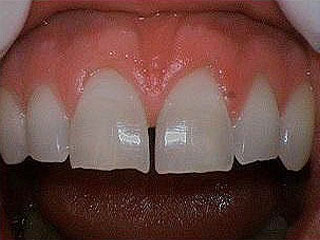
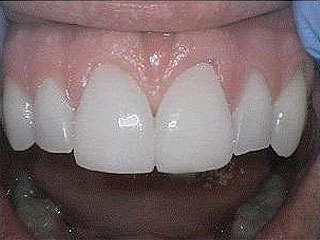
If whitening hasn’t fixed a stain, or a chip, gap, or uneven edge bothers you every time you see a photo, veneers may be the fix. They’re a cosmetic solution for teeth that are otherwise healthy but don’t look the way you want.

Who is a candidate for Veneers?

Good candidates have healthy teeth and gums with no active decay or gum disease. Veneers work well for staining that won’t respond to whitening, minor chips, small gaps, or slightly uneven tooth shapes.

What does the Veneers process involve?

A thin layer of enamel is removed from the front of the tooth so a custom porcelain shell can be bonded on top. You send impressions to a lab, and a temporary veneer covers the tooth until the permanent one is ready and placed at a follow-up visit.

Where do Veneers fit into your treatment plan?

Veneers are typically the last step in a treatment plan, placed once any fillings, gum treatment, or orthodontic movement is finished. That way, the shade and shape match a stable, finished smile.

When is the right time to consider Veneers?

Once your oral health is stable and any orthodontic movement is complete. Starting veneers too early, while teeth are still shifting, risks a result that won’t hold up once everything settles.

Why porcelain Veneers over composite bonding or DIY kits?

Composite bonding and DIY snap-on veneers cost less upfront, but they don’t last as long over time. A ten-year practice-based clinical study comparing ceramic and direct composite veneers found that ceramic veneers held up significantly longer, with better resistance to fracture, wear, and color mismatch than composite.

Delaying Treatment on a Chip or Discoloration Can Turn a Cosmetic Fix Into a Structural One

A chip or stubborn stain rarely stays purely cosmetic if the underlying cause goes unchecked. A study of patients who sought delayed treatment after a dental injury found pulp damage in over 90% of those cases, along with a high rate of tooth discoloration tied to the delay itself. Catching a chip or discoloration early keeps the fix cosmetic, rather than letting it progress to a root canal before a veneer can even be placed.

Speak With A Professional!

Clear Aligners (Invisalign)

Is Invisalign right for you?

A crooked smile or a bite that’s slightly off doesn’t have to mean a mouth full of metal. Invisalign moves teeth gradually with a series of clear, custom aligners that are far less noticeable than fixed braces.

Who is a candidate for Invisalign?

Most teens and adults with mild to moderate crowding, spacing, or bite issues are good candidates. Dr. Yazdanmehr examines your bite in person to confirm fit, since some more complex cases still respond better to traditional orthodontics.

What does the Invisalign process involve?

A digital scan maps how your teeth will move before we make any trays. You’ll swap in a new aligner roughly every one to two weeks, and check in periodically to confirm progress. Most patients finish in under a year.

Where does Invisalign fit into your treatment plan?

Aligners work best on a mouth that’s already stable, so we resolve active decay or gum disease before the first tray goes in.

When is the right time to consider Invisalign?

Crowding and bite problems don’t improve on their own, and the tight spots they create only get harder to keep clean over time. Starting earlier usually means fewer total aligners.

Why Invisalign over fixed braces?

Beyond being removable for eating and brushing, aligners have shown a measurable comfort advantage over fixed braces in head-to-head research. A comparative study of 100 orthodontic patients found that those treated with clear aligners reported significantly higher satisfaction with comfort and appearance than those treated with traditional braces. At the same time, overall treatment effectiveness was comparable between the two.

Leaving Crowding or Bite Problems Untreated Raises Your Risk of Decay and Gum Disease

Crowded or misaligned teeth create tight spots that are harder to brush and floss effectively, and those exact spots tend to develop problems first. According to a clinical reference maintained by the National Institutes of Health, complications of untreated malocclusion include increased tooth decay and gingivitis, since crowding traps food and makes interproximal cleaning difficult. Straightening earlier means fewer years of fighting an uneven bite for your gums and enamel.

Speak With A Professional!

Teeth Whitening

Is professional teeth whitening right for you?

If years of coffee, tea, or wine have left your smile duller than you’d like, professional teeth whitening delivers cosmetic benefits that go well beyond what you can find on a drugstore shelf.

Who is a candidate for teeth whitening?

Most patients with healthy teeth and gums are candidates, as long as you treat any decay or gum disease first. Whitening won’t change the color of existing crowns, veneers, or fillings, so you may need to plan around those separately.

What does the teeth whitening process involve?

A professional-strength whitening gel is applied under controlled conditions, either in-office for a faster result or through a custom take-home tray for gradual whitening. The provider monitors sensitivity throughout so the process stays comfortable.

Where does teeth whitening fit into your treatment plan?

Whitening is usually done after restorative work and often scheduled just before other cosmetic treatments like veneers or bonding so new restorations can be shade-matched to your brightest, most current smile.

When is the right time to consider whitening?

Anytime your smile no longer matches how you feel, though timing it before a big event or before veneers gives the best long-term match.

Why professional whitening over over-the-counter kits?

Store-bought strips and trays use lower-strength gel and a one-size tray that doesn’t fit your teeth precisely, which limits results. A randomized controlled clinical trial comparing dentist-dispensed whitening against two over-the-counter whitening systems found the professionally dispensed treatment produced a significantly greater, more stable color change than either OTC option.

Relying on Unsupervised At-Home Products Long Term Carries Its Own Risk

Reaching for another box of strips instead of getting a professional opinion is an understandable habit, but it isn’t risk-free. A peer-reviewed review of tooth-whitening products found that hydrogen peroxide can produce undesirable effects on enamel and dentin beyond simply lightening tooth color. A supervised treatment plan helps you get a brighter, healthier smile without guessing how much product is too much.

Speak With A Professional!

Why Choose Us

Choosing a dentist your family can count on for years takes more than one good cleaning. Here’s what patients in Linda Vista notice about care at Salt and Smile Dental Co.

Request Appointment

Client Testimonials

More Testimonials

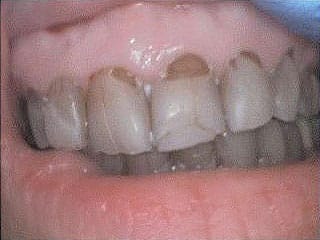
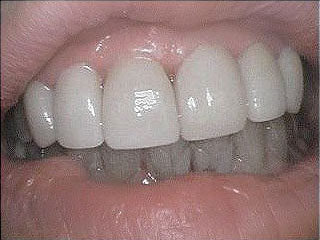
Before & After

FAQs

What if it's been years since my last dental visit?

You’re not the first, and that doesn’t change how we’ll treat you. The first appointment starts with a comprehensive exam, so you and Dr. Yazdanmehr are working from the same, current picture of your mouth, not guesswork based on however long it’s been. From there, we explain any next steps before scheduling them.

How do I know if I need a cleaning or a more involved treatment?

Most patients don’t know the answer before they come in, and that’s completely normal. We use oral exams and imaging to determine what’s happening beneath the surface. From there, you’ll be told clearly whether routine cleanings and monitoring are the right call or whether a more involved dental procedure is needed.

What counts as a dental emergency here?

A broken tooth, a knocked-out tooth, an abscessed tooth, or pain sharp enough to interrupt your day qualifies as a dental emergency. We fit walk-in emergencies into that day’s schedule rather than the next open slot, since an infection or fracture gets worse the longer it sits.

How often should I schedule a dental cleaning?

For most patients, twice-yearly cleanings are standard to support long-term oral hygiene. Some patients with a history of gum disease or higher cavity risk benefit from more frequent visits, typically every three to four months.

Does Salt and Smile Dental Co. see patients of all ages?

The practice focuses on teens and adults, offering the full range of general, restorative, and cosmetic dental services in one place. Younger children who need pediatric-specific care are referred to a trusted specialist, but the rest of the family can be seen right here, in one shared dental home.

Claim Your Spot With the Dentist Linda Vista San Diego Community Depends On

The dentist Linda Vista San Diego patients drive across town for starts with real listening, not a rushed diagnosis. Dr. Shawn Yazdanmehr and the team at Salt and Smile Dental Co. are ready to give your missing, damaged, or aching tooth the attention it deserves. Book your visit today, and follow Salt and Smile Dental Co. on Facebook and Instagram for smile tips, office updates, and a closer look at the practice before you ever sit in the chair.

Book Your Appointment!