
Patients searching for a dental crown in Mission Valley find continuous, personal dental care at Salt and Smile Dental Co., where one dentist follows every case through. A crown fits over what’s left of a compromised tooth, rebuilding its strength through restorative dentistry and offering a long-term solution instead of a repeat filling. Dr. Yazdanmehr chooses dental materials, from tooth-colored porcelain to metal, based on your tooth and bite force.
Dental Crown in Mission Valley
Meet the Doctor
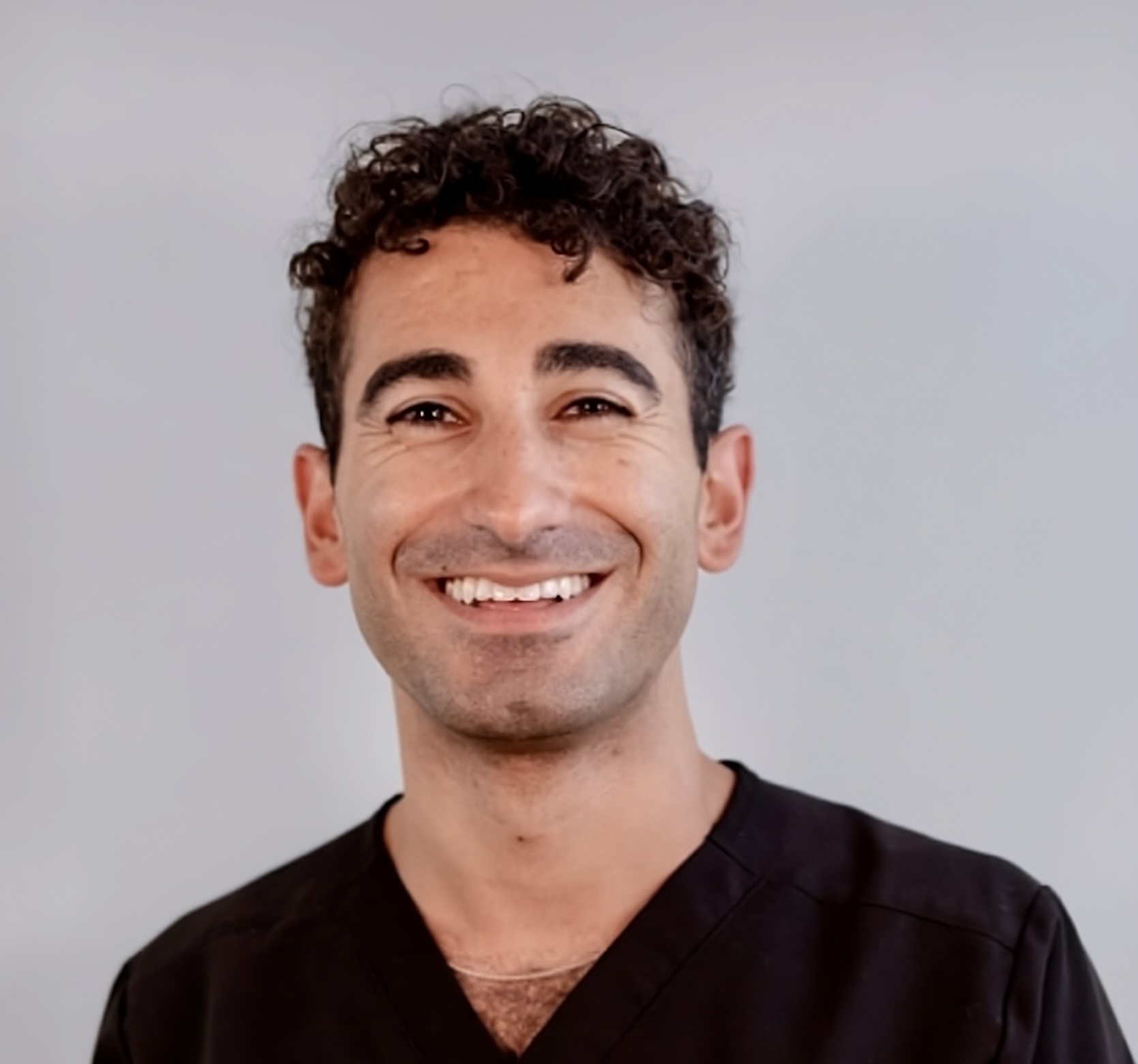
Every crown case at Salt and Smile Dental Co. goes through Dr. Shawn Yazdanmehr personally, since he is the practice’s only dentist. He trained at UCLA, completed dental school at the University of the Pacific’s Arthur A. Dugoni School of Dentistry, then practiced in Chicago before settling back near his Carlsbad roots in San Diego. Crowns, bridges, implants, and cosmetic work make up the bulk of what he does day to day. Hygienists Hoa Flores, Atoosa, and Nancy, along with assistants Alondra and Mildred, round out a team built around that same commitment to your dental health.
Wondering if your tooth needs a crown?
Could a crown be the right fix?
A tooth that hurts, looks damaged, or just feels off isn’t always a crown situation, and it helps to know the difference before you’re sitting in the chair. The questions below walk through the signs that typically point toward this treatment. Use them to get a sense of where you stand.


Our Dental Crown Options
Porcelain and Ceramic Crowns
Porcelain and ceramic crowns don’t compromise on appearance because they’re built to mimic how light passes through real enamel. They work especially well on the teeth people notice most: front teeth and premolars caught in an everyday smile. Because there’s no metal underneath, patients with metal sensitivities or a preference against it tend to gravitate toward this option. It’s one of the restorative services Dr. Yazdanmehr places most often.
That same aesthetic quality comes with a tradeoff on molars, where bite forces run highest. Porcelain is more prone to chipping there than metal or zirconia-backed alternatives, and nighttime grinding only increases that risk. A review in the International Journal of Prosthodontics found “molar crowns (8.1%) showed a significantly higher 5-year fracture rate than premolar crowns (3.0%).”
Same-Day Crowns (CEREC / Milled Crowns)
Same-day crown technology uses a digital scan to design and mill a ceramic crown in one appointment, skipping the temporary crown and second visit. This suits patients who can’t spare extra time off work or dislike wearing a temporary. The crown is milled using computer-aided design and adjusted the same day it’s prepared. Patients often ask how it compares to a traditionally fabricated crown.
Same-day convenience is real, and outcomes for straightforward cases are well-documented. Traditionally fabricated crowns may still offer better marginal fit for complex cases or unusual tooth geometry. One fit study found “the Control group was 91.15 (±15.35) µm, the CEREC group was 111.07 (±6.33) µm,” with the CEREC crown showing the larger gap. Dr. Yazdanmehr chooses per case, not by default.

Your Dental Crown Treatment, Step by Step
Meeting Dr. Yazdanmehr for Your Initial Exam
This first dental appointment starts with Dr. Yazdanmehr taking a close look at the tooth and walking you through what he finds, with no guesswork. Once you understand the plan and feel ready, he numbs the area before any dental treatment begins. Every crown case at Salt and Smile starts the same way. You leave this visit knowing exactly what comes next.
Prepping the Tooth and Capturing Your Crown's Shade
Making room for the crown means removing a thin layer of the tooth’s outer surface first. From there, either a physical impression or digital scan captures precise shade and shape details the lab needs to build tooth-colored restorations that match your smile. That record becomes the blueprint for your custom-fitted cap. You won’t leave this appointment with an exposed tooth, since a temporary sits over it until your next visit.
Living with Your Temporary Crown
Between visits, a temporary crown protects the tooth while the permanent one is being made, though it’s not designed for the long haul. Patients sometimes notice mild sensitivity or a slightly different bite during this stretch, which is normal. Skip gum, caramel, or anything that could pull the temporary loose, and call the office if it does come off before your next appointment. This in-between phase typically runs one to two weeks.
Fabricating Your Custom Crown
Behind the scenes, the lab builds your crown from materials chosen for that specific tooth, more translucent porcelain up front, tougher options for a molar carrying heavy bite force. Nothing is generic, since the shape comes straight from your impressions or scan. When it’s done right, you shouldn’t even notice it’s there once it’s in your mouth.
Placing and Adjusting Your Permanent Crown
The second dental crown fitting is shorter than the first: off comes the temporary, on goes the permanent crown for a trial fit. Dr. Yazdanmehr takes his time here, since bite alignment matters more than people expect, and even a small crown error can cause jaw or tooth pain weeks later. He’ll polish down high spots chairside rather than sending you home to get used to it. Once it feels right when you bite down, it’s cemented for good.
Maintaining Your Crown Over Time
Once your crown is in place, the main thing that shortens its life is neglect, whether that’s skipped brushing, ignored grinding, or years between dental visits. Watch for looseness, a change in how your bite feels, or new sensitivity around that tooth, and don’t wait to have any of those checked. Dr. Yazdanmehr closely examines every existing crown during your regular visits, so problems rarely go unnoticed for long. With proper care, this restoration should be one of the last things you have to think about.
Alternative Treatments: What happens if you do nothing?
Financial Implications of More Invasive Solutions
Skipping a crown rarely saves money over time. A fixable tooth that’s lost instead needs extraction, often bone grafting, and then an implant or bridge, a longer and far pricier sequence than the crown that could have prevented it. A cost-effectiveness study in BMC Oral Health found “the cost advantage of NSRCT (4,751 CNY) over STI (20,298 CNY) was more pronounced” when weighing root canal treatment against a single-tooth implant. Salt and Smile handles that more invasive sequence when it’s needed, but addressing a tooth early stays the more cost-conscious path.
Health Implications of More Invasive Solutions
A cracked or decaying tooth lets bacteria past the enamel, and once they reach the inner tissue, spreading further is more likely than not. Salt and Smile offers bone grafting after extractions for cases that reach that point, but saving the natural tooth is always the first goal. Published research on periapical disease found that “uncontrolled infections often lead to extensive bone loss around the root tip.” A crown placed in time can sidestep that chain of events.
Safety Implications of More Invasive Solutions
An untreated crack or deep decay makes a tooth unpredictable. It can fracture suddenly, or infection can spread into the jaw or neck. Salt and Smile offers emergency dental care, but preventing the emergency always beats treating it later. A case series on delayed diagnosis found “spread of untreated dental infection to the neck may result in upper airway obstruction.” A timely crown heads off that risk.


Protect Your Smile with a Dental Crown in Mission Valley!
Ready to protect a damaged tooth before it worsens? At Salt and Smile Dental Co., Dr. Shawn Yazdanmehr provides a dental crown in Mission Valley built around your bite, your budget, and a healthier smile. Schedule today and take the first step toward lasting, natural-looking relief.
FAQs
What are dental crowns made of?
Dental crowns are built from a range of dental materials, including tooth-colored porcelain, zirconia, and metal, each suited to different dental procedures and locations in the mouth. Porcelain dental crowns work well for front teeth because they mimic a natural tooth’s translucency, while sturdier materials suit molars under heavy bite force. Dr. Yazdanmehr selects the right combination based on your treatment plan and long-term solution needs.
What's the difference between a dental crown and a veneer?
A veneer is a thin shell bonded to the front surface of a tooth, mainly used for cosmetic improvements rather than structural repair. A dental crown covers the entire tooth for full protection when there’s significant dental decay or damage. If your tooth is healthy but just needs a cosmetic boost, a veneer may be the simpler dental procedure. Dr. Yazdanmehr will recommend the restorative dentistry option that best fits your tooth’s condition.
How is a dental crown different from a dental bridge or implant?
A dental crown restores a single damaged tooth that’s still present, while a bridge or implant replaces a tooth that’s missing entirely. Crowns are often part of these larger treatment plans too, anchoring a bridge or topping an implant post. Choosing between them depends on whether you can still save your natural tooth. Dr. Yazdanmehr walks through every dental procedure option before recommending one.
What should I do if my temporary crown falls off?
Call Salt and Smile Dental Co. right away so the tooth doesn’t sit unprotected for long, since a missing temporary can shift teeth or expose sensitive dentin. In the meantime, keep the area clean with gentle dental hygiene and avoid chewing on that side. Don’t try to glue it back yourself. Dr. Yazdanmehr can usually recement or replace it quickly at a short dental appointment.
Can a dental crown improve the look of my smile as well as fix damage?
Yes, a well-made crown does more than repair structure; it can also improve your smile with natural-looking restorations shaped and shaded to match your teeth. Many patients choose porcelain or ceramic specifically for that cosmetic benefit alongside the functional repair. Dr. Yazdanmehr treats appearance and oral health as part of the same treatment plan, not separate goals.