
Most dental veneers La Mesa patients start with one dentist, Dr. Shawn Yazdanmehr, who guides every visit from consultation through bonding. Veneers are thin, custom-shaded shells bonded to your teeth to fix dental imperfections like chips, gaps, and stubborn staining. The process needs only minimal tooth preparation, preserving more natural dental enamel than a crown. As your cosmetic dentist, he’ll tell you honestly whether porcelain veneers suit your dental needs.
Dental Veneers La Mesa


Meet Dr. Yazdanmehr
Dr. Shawn Yazdanmehr studied pre-dentistry at UCLA before earning his dental degree from the University of the Pacific’s Dugoni School of Dentistry. He practiced in downtown Chicago before returning to San Diego to open Salt and Smile Dental Co., where he focuses on veneers, crowns, and cosmetic dentistry. He explains each step before it happens and treats dental anxiety as a real clinical factor.
Are you experiencing smile concerns you’ve been putting off?
Is dental veneer treatment right for you?
Avoiding cameras, holding back a full laugh, or smiling with a closed mouth in photos are patterns many patients mention before their first veneer consultation. Veneers aren’t right for every case, but for patients with healthy underlying tooth structure, they resolve multiple cosmetic issues in one course of treatment. Unlike more invasive procedures, they don’t require a lengthy recovery time.

How Dr. Yazdanmehr Places Your Dental Veneers
Reviewing Your Smile Goals and Dental Health
Your first visit is a real conversation, not a sales pitch. Dr. Yazdanmehr listens to what’s bothering you about your smile, then examines your dental enamel and gum health. He’ll flag anything that needs attention before cosmetic work starts, like early gum disease. Most consultations run 30 to 45 minutes.
Designing a Plan Around Your Smile
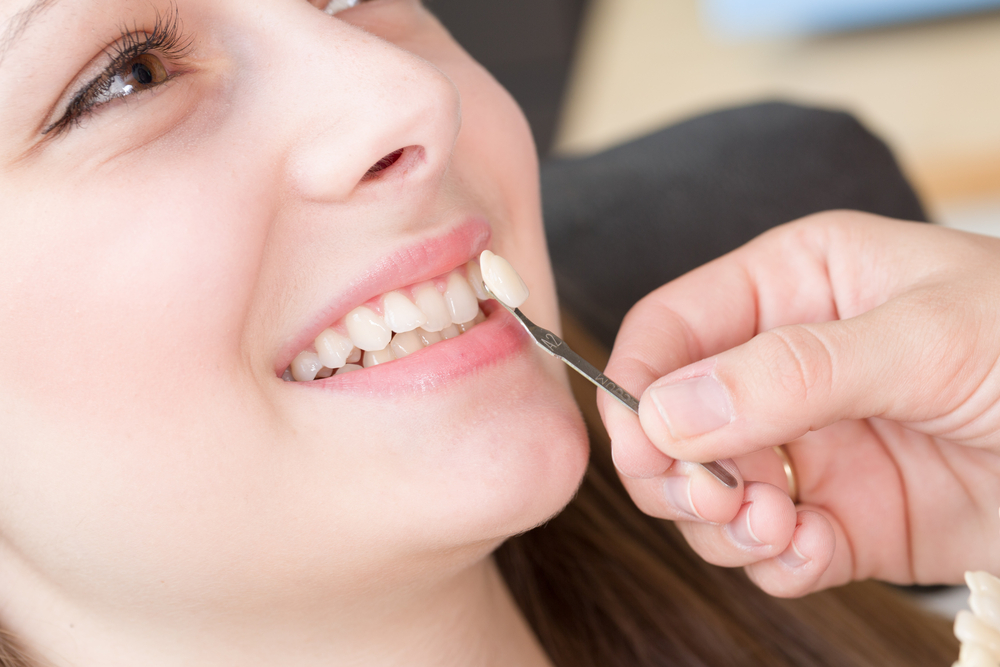
Once you’re cleared for treatment, Dr. Yazdanmehr builds treatment plans specific to your goals. Maybe that’s closing a gap, correcting a chip, or refreshing several teeth at once. He’ll walk you through shade and shape options before committing to anything. Nothing moves forward until you approve the plan.
Preparing and Bonding Your Veneers
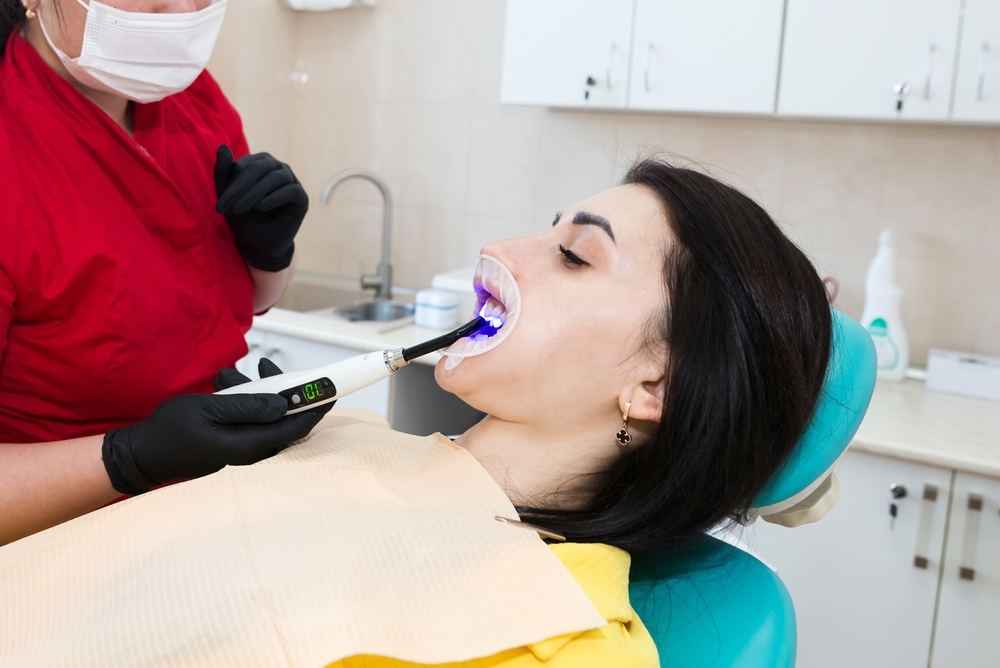
At your preparation visit, Dr. Yazdanmehr lightly buffs and etches your teeth for a stronger bond, then takes an impression to send to the lab. Temporary veneers protect your teeth while your permanent set is fabricated. Once ready, he bonds each veneer in place and hardens the adhesive with a curing light.
Protecting Your Veneers at Home
Caring for veneers mirrors caring for natural teeth: brush twice daily, floss once daily, and keep your cleaning schedule for lasting dental health. Skip habits like chewing ice or biting into hard foods, since that stresses the veneer’s edge. A nightguard is worth it if you grind at night.
Checking In After Your Final Visit
Before you leave your last appointment, Dr. Yazdanmehr checks your bite and makes any needed adjustments. After that, your veneers simply become part of your regular oral health routine, reviewed at normal checkups. If sensitivity or a rough edge comes up later, Salt and Smile Dental Co. can address it quickly.
Our Options for Dental Veneers
Porcelain Veneers
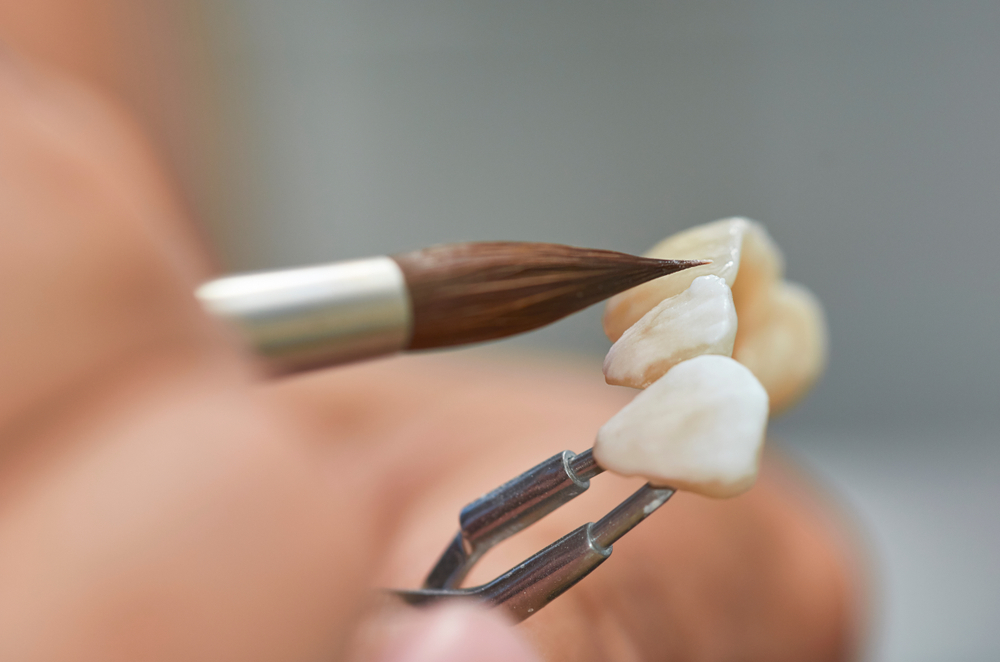
Porcelain veneers are lab-fabricated restorations custom-made to the shape, size, and color you and Dr. Yazdanmehr agree on. They bond to your tooth’s front surface and replicate natural enamel’s light-reflecting quality better than composite can. Porcelain resists stains and holds its appearance for a decade or more. Most porcelain veneer cases here are completed in two to three visits.
Porcelain veneers offer strong aesthetics and a clinical lifespan of 10 to 20 years with proper maintenance. The enamel preparation is irreversible, though, and the tooth will always need a restoration once treatment begins. Upfront cost is higher than composite, and heavy grinders risk chipping the surface without a nightguard. A systematic review found survival rates above 93% for ceramic laminate veneers at a mean follow-up of 10.4 years.
Composite Veneers
Composite veneers are applied directly to the tooth in a single chairside visit using tooth-colored resin. The process needs little to no enamel removal, making it more reversible than porcelain. They cost less upfront and can often be repaired chairside if chipped. The tradeoff is a shorter lifespan, typically five to seven years, with more staining over time.
Composite veneers finish in one visit, need minimal enamel removal, and cost less upfront than porcelain. You can often repair chips without replacing the whole restoration. Composite resin is more porous, though, and stains more easily from coffee, tea, and red wine. A systematic review found composite laminate veneers had a pooled survival rate of 88%, with direct application outlasting the indirect lab-fabricated approach.
What happens if you do nothing?
Financial Implications of More Invasive Solutions
Leaving chipped, cracked, or stained teeth unaddressed rarely saves money over time. Cosmetic damage that progresses to structural compromise needs a crown instead of a veneer, and a crown costs more in both time and money. If damage reaches the pulp, a root canal is necessary before the crown can even be placed. Patients who delay often pay for the original fix plus the restorative work that became necessary.
That added cost is well documented. FAIR Health, the nonprofit that tracks nationwide dental billing data, reports an average out-of-pocket root canal cost of $762 to $1,111 depending on the tooth, plus an average crown cost of $1,661, putting a typical root canal-and-crown package in the $2,400 to $2,800 range per tooth. That’s well above what a veneer costs to place while the damage is still cosmetic, before decay reaches the point where a root canal becomes necessary.
Health Implications of More Invasive Solutions
Once a pulp infection takes hold, it doesn’t stay contained to one tooth. Left untreated, it can spread to surrounding tissue and bone, putting adjacent teeth at risk and causing health effects that extend beyond the mouth. Patients who arrive for a porcelain veneers consultation in La Mesa, CA, are sometimes surprised by how close they are to needing a root canal.
Supporting Citation: Health Implications
The NIH’s own clinical reference on dental infection documents this scope directly. Roughly a quarter of U.S. adults live with untreated tooth decay, and pulp infections carry a real risk of spreading beyond the tooth, in some cases into the deep tissue of the neck or toward the sinuses at the skull’s base. That’s the trajectory patients stay ahead of by addressing damage while it’s still cosmetic, connecting oral health to systemic health.
Safety Implications of More Invasive Solutions
Broken or jagged tooth edges create physical hazards inside the mouth that patients often underestimate. Sharp enamel fragments can cut soft tissue, and a tooth that’s already cracked is structurally weaker under normal bite force. The further damage spreads, the higher the risk that a tooth fractures beyond repair, leaving extraction as the only option. Delayed veneer replacement also increases enamel exposure and sensitivity risk.
Clinical literature on cracked-tooth management backs up this structural concern. Once a crack reaches the tooth’s nerve, the pulp and surrounding bone become vulnerable to significant damage, and a tooth in that condition is a candidate for extraction rather than repair. A tooth that’s already lost structural integrity is simply more prone to breaking further under normal bite force.

Start Your Dental Veneers La Mesa Consultation Today!
Dental veneers La Mesa residents trust start with a conversation with Dr. Shawn Yazdanmehr and the team at Salt and Smile Dental Co. Find the practice on Facebook and Instagram to get a feel for the office before your visit. Reach out through our contact page to schedule your consultation and take the first step toward the smile you’ve pictured.
FAQs
How long do porcelain veneers last?
Porcelain veneers typically last 10 to 20 years with proper care, including brushing twice daily, flossing, and keeping up with cleanings at Salt and Smile Dental Co. Avoid habits like chewing ice or using your teeth to open packaging. Patients who grind at night get more longevity by wearing a nightguard consistently. Composite veneers last shorter, typically five to seven years.
Does the veneer preparation process hurt?
Most patients find the preparation appointment comfortable with local anesthesia. Some sensitivity after enamel removal is normal and typically resolves once permanent veneers are bonded. The bonding appointment itself is generally painless. Dr. Yazdanmehr walks through each step beforehand, so patients aren’t caught off guard.
Can veneers correct the appearance of crooked teeth?
Veneers can improve mildly uneven or slightly misaligned teeth by adjusting the visible tooth surface. They’re not a substitute for orthodontic treatment when misalignment is significant. If your bite concerns are moderate to severe, Dr. Yazdanmehr may recommend addressing those first. Veneers placed over a misaligned bite are more prone to uneven wear.
What's the difference between a veneer and dental bonding?
Veneers, porcelain or composite, cover the entire visible tooth surface as a complete cosmetic restoration. Dental bonding uses composite resin on a smaller, targeted area, like a single chip or gap. Bonding costs less and requires no enamel preparation, but it needs more frequent replacement. For multiple cosmetic concerns, veneers usually deliver a more consistent, longer-lasting result.
Do I need to do anything special to maintain my veneers after placement?
Caring for veneers follows the same routine as natural teeth: brush twice daily, floss once daily, and keep your regular cleaning schedule. Avoid biting directly into hard foods, and steer clear of habits that stress the veneer surface. If you grind at night, a nightguard is one of the most effective ways to protect your investment. Composite veneers stain more readily, so rinsing after coffee or wine helps.